Have you ever received a text message that ended with “PS” and wondered what it actually means? You’re not alone. In today’s fast-moving digital world, text abbreviations and internet slang appear everywhere, making online conversations quicker and more convenient.
Among these common abbreviations, “PS” is one that often catches people’s attention. While many recognize it from letters and emails, its meaning in text messages can vary depending on the context.
Understanding how and when people use PS can help you avoid confusion and communicate more effectively.
Featured Snippet:
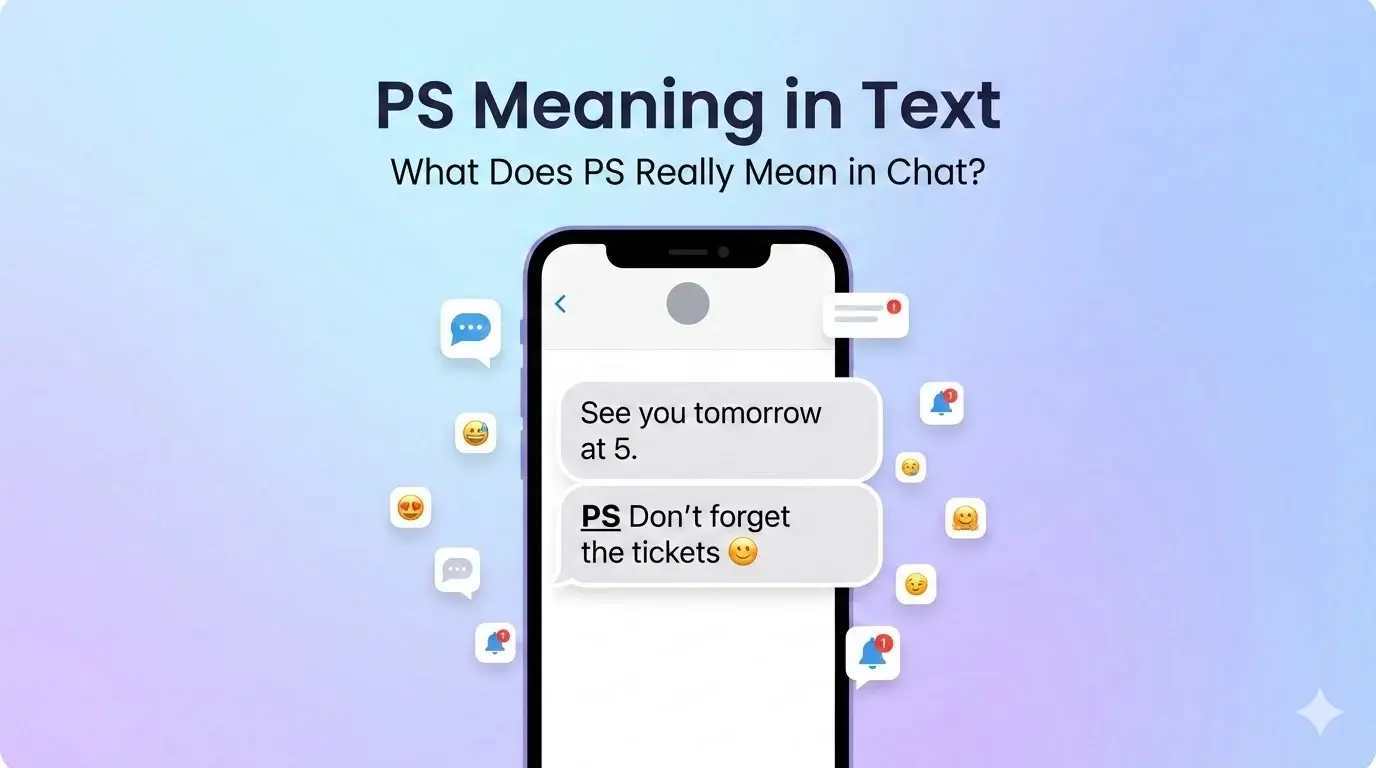
PS in text means “postscript,” a short message added at the end of a letter, email, or text after the main content is finished. It is used to include extra thoughts, reminders, or important notes that were not included earlier in the message.
What Does PS Mean in Text?
The most common PS meaning in text is postscript. It is used when someone wants to add something extra after finishing their main message.
For example:
- “I had a great time today. PS: Don’t forget to send me the pictures.”
- “See you tomorrow! PS: Bring your notebook.”
In texting, PS acts like a small “bonus message.” It usually contains something important, funny, or additional that the sender remembered after finishing the main sentence.
People use PS because it feels natural and conversational. Instead of rewriting the entire message, they simply add a short note at the end.
Origin of PS (Postscript Meaning Explained)
To fully understand PS meaning in text, you need to know where it comes from.
The term PS comes from the Latin phrase “post scriptum,” which means “written after.”
Originally, PS was used in handwritten letters. Before emails and texting existed, people would write long letters. If they forgot something, they would simply add it at the end using PS.
Example from old letters:
- “I hope you are well. I will visit next week. PS: Give my regards to your family.”
Even today, the same idea continues in digital communication. The only difference is that now we use it in WhatsApp chats, emails, Instagram captions, and even business messages.
How PS is Used in Text Messages
In modern communication, PS meaning in text messages is all about adding extra thoughts after the main message is complete.
Common Uses of PS in Texting:
- Adding forgotten information
- Sharing a reminder
- Adding humor or emotion
- Highlighting something important
Example in friendly conversation:
- “Good luck for your exam! PS: You’ve got this!”
PS makes messages feel more personal and natural. It often adds warmth or personality to digital conversations.
PS in Emails and Formal Writing
While texting is casual, PS is also widely used in professional emails. However, its tone changes slightly.
In formal communication, PS is used to:
- Highlight important reminders
- Add extra business notes
- Emphasize key points
Example in email:
- “Thank you for your time and consideration.
PS: Please find the attached document for your review.”
In business communication, PS is useful when you don’t want to disturb the structure of the main email but still need to add something important.
Even marketers use PS in emails because readers often pay attention to it at the end.
PS vs PPS vs PPS (Multiple Postscripts Explained)
Many people get confused between PS, PPS, and even PPSP. Let’s clear it up.
PS (Postscript)
This is the first additional note after the main message.
- “PS: Don’t forget the meeting tomorrow.”
PPS (Post Postscript)
This is used when you add another note after PS.
- “PS: Call me later.
PPS: I also sent you the file.”
PPPPS (Rare Usage)
This is rarely used but sometimes appears humorously when people keep adding notes.
However, in modern texting, most people only use PS and sometimes PPS. Anything beyond that is usually unnecessary.
Common Examples of PS in Real Conversations
To understand PS meaning in text better, let’s look at real-life situations.
1. Friendly Chat
- “Had a great day with you. PS: Let’s do it again next weekend.”
2. Romantic Message
- “I love spending time with you. PS: You looked amazing today.”
3. Reminder Message
- “Meeting is at 5 PM. PS: Don’t be late.”
4. Funny Message
- “I finished all my work today. PS: I deserve a trophy.”
5. Family Chat
- “Dinner is ready. PS: Don’t forget to wash your hands.”
These examples show how flexible PS is in everyday communication.
PS in Social Media (WhatsApp, Instagram, TikTok)
On platforms like WhatsApp, Instagram, and TikTok, PS meaning in text has become even more creative.
People use PS to add quick notes:
- “I’ll be offline tonight. PS: My phone is dying.”
Instagram Captions
Creators use PS to engage followers:
- “Amazing trip to the mountains! PS: More pictures coming soon.”
TikTok Posts
Creators often use PS for humor or punchlines:
- “I tried a new recipe today. PS: Never again.”
On social media, PS adds personality and makes posts feel more relatable.
Mistakes People Make While Using PS
Even though PS is simple, many people misuse it.
1. Using PS in the middle of a sentence
Wrong:
- “I PS went to the store.”
Correct:
- “I went to the store. PS: I bought snacks.”
2. Overusing PS
Too many postscripts make messages confusing.
3. Using PS for main information
PS should not contain the main idea. It is always secondary.
4. Wrong punctuation
Always place PS at the end of the message, not randomly.
Understanding these mistakes helps you use PS more effectively.
When Should You Use PS in Texting?
You should use PS when:
- You forget something after finishing your message
- You want to add a fun or emotional note
- You want to emphasize a reminder
- You want to make your message more personal
However, avoid using PS when:
- The information is too important for the main message
- The message is already too long
- The tone is extremely formal and strict
Using PS correctly makes your communication smoother and more natural.
FAQ: PS Meaning in Text
1. What does PS mean in text messages?
PS means “postscript,” used to add extra information after a message is completed.
2. Is PS formal or informal?
It can be both. It is informal in texting and semi-formal in emails.
3. Can I use PS in WhatsApp?
Yes, PS is commonly used in WhatsApp chats to add extra notes.
4. What is the difference between PS and PPS?
PS is the first extra note, while PPS is an additional note after PS.
5. Is PS still used in 2026?
Yes, PS is still widely used in texting, emails, and social media.
6. Where should PS be placed in a message?
It should always be placed at the end of a message.
7. Can PS be used in professional emails?
Yes, but it should be used carefully and only for short additional notes.
Conclusion
Understanding PS meaning in text helps you improve your communication in both casual and professional settings. PS stands for postscript, and it is used to add extra thoughts after finishing a message.
Whether you’re texting a friend, writing an email, or posting on social media, PS adds clarity, personality, and sometimes even emotion to your message. From simple reminders to heartfelt notes, PS remains a timeless tool in digital communication.

I am Daniel Brooks, a passionate writer who loves creating helpful and engaging content for readers worldwide.
I am dedicated to sharing easy-to-understand information about trending topics, texting slang, and digital culture.
I enjoy researching new ideas and turning complex topics into simple, reader-friendly articles.
I am always focused on delivering valuable, accurate, and enjoyable content for every visitor.